
Money Activity Set – US Currency
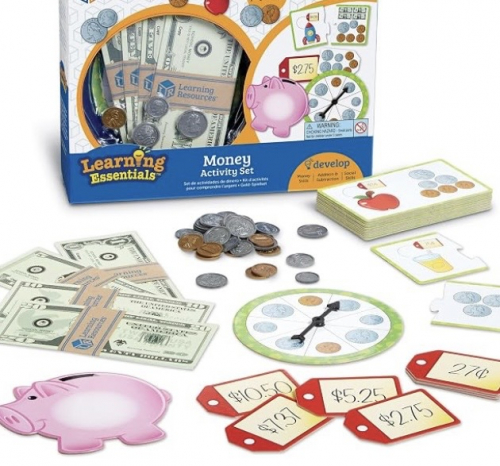
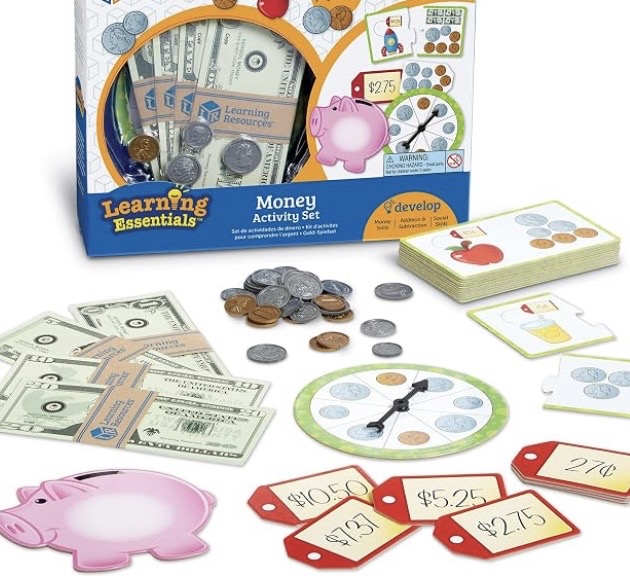
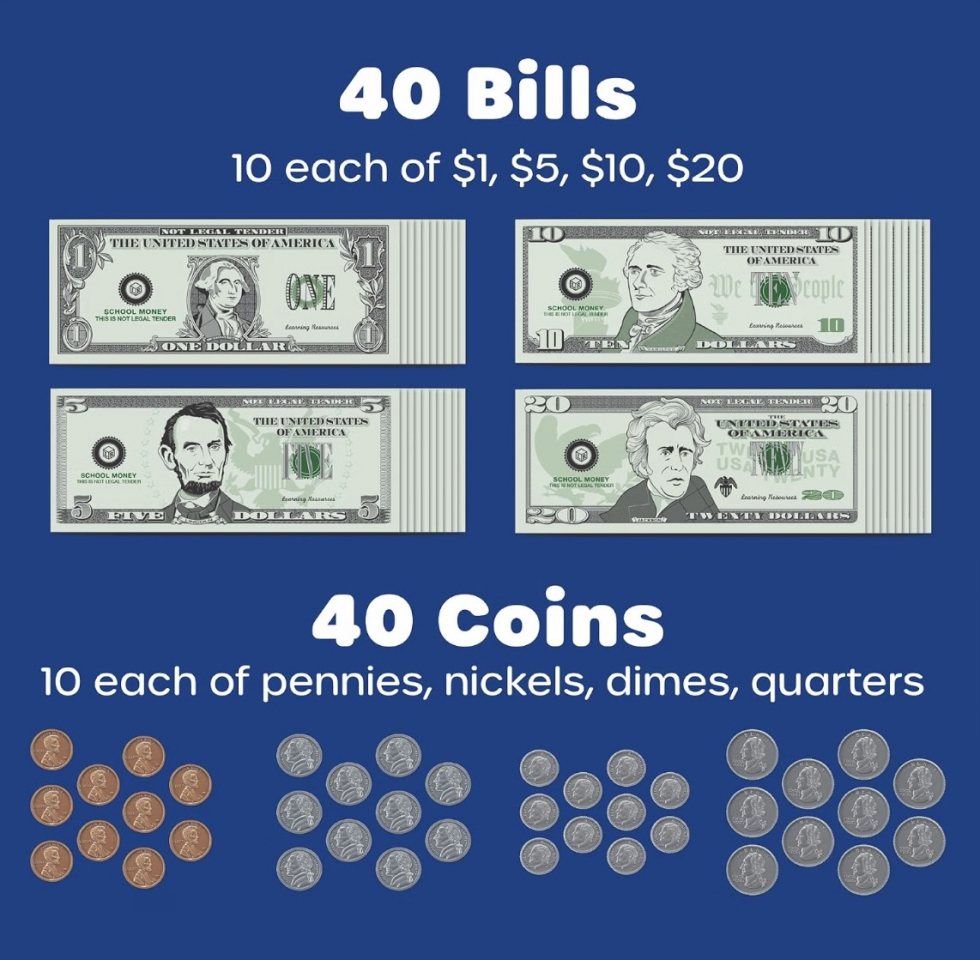
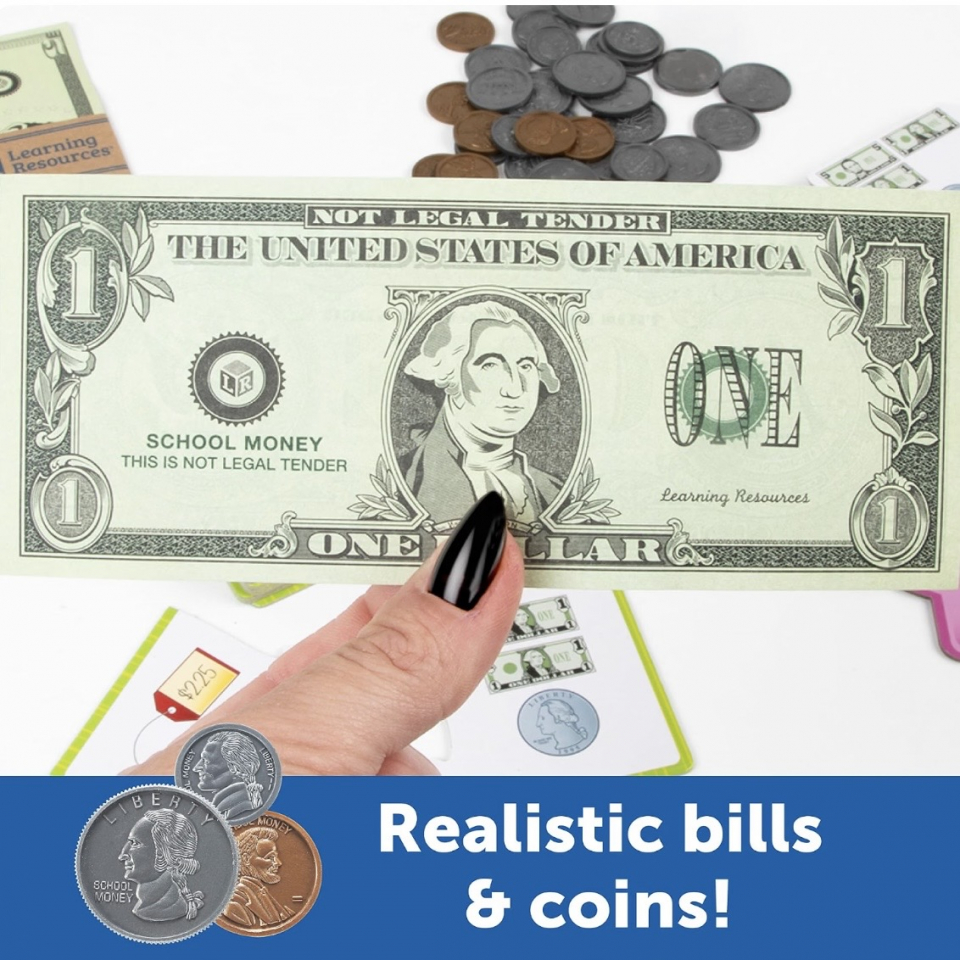
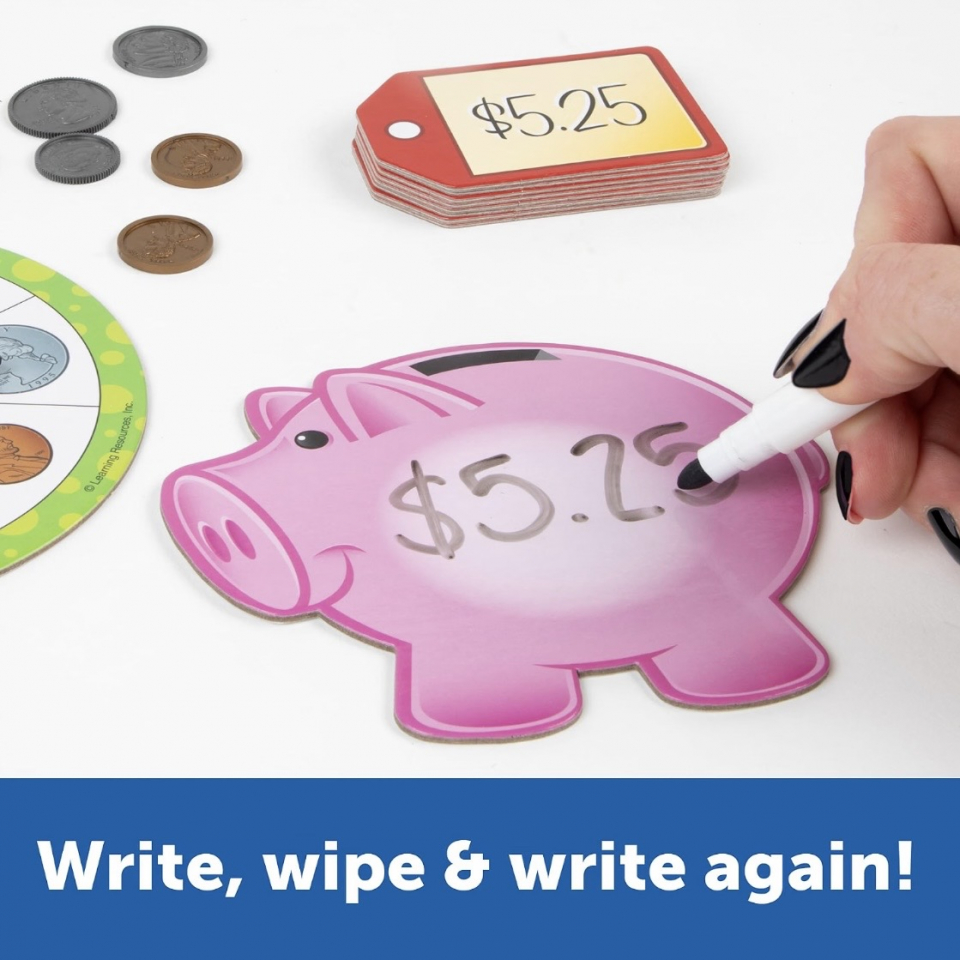
Help children understand the value of money and practise using it in everyday situations. With US play coins and bills, matching puzzle cards, and price tags, children can explore how to pay for purchases, combine amounts, calculate change, and shop within a budget.
Activities progress from recognising individual coins to making decisions in a pretend shop, connecting mathematics with familiar experiences.
Recognise Coins and Their Values
Begin with a small selection of coins. Name each denomination, discuss its value, and invite the child to sort matching coins into groups. Use the pictures on the puzzle cards to help children recognise and count them.
Compare a few groups to discover that more coins do not always mean more money. For example, five pennies are worth less than one dime.
Count Out Money for a Purchase
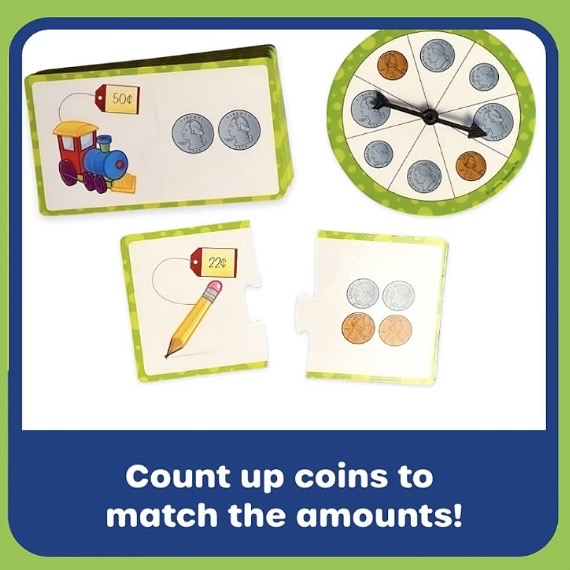
Choose a picture card, read its price, and invite the child to count out the amount needed to buy the item. Start with amounts that can be made using one denomination, then introduce combinations of different coins.
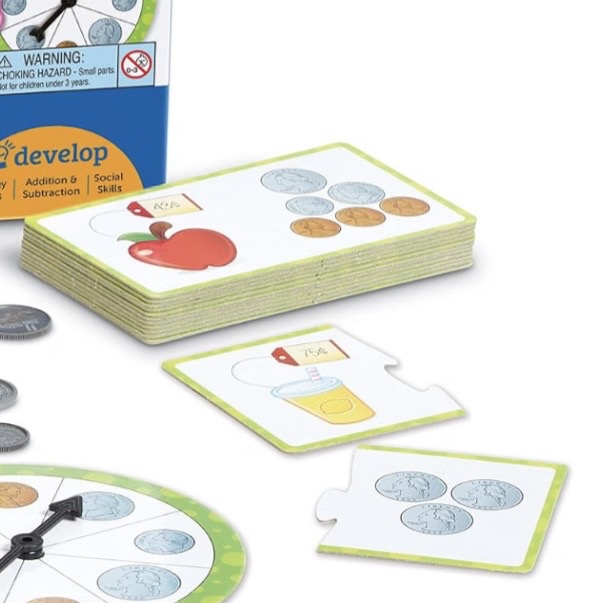
The child can also match the item-and-price half of a puzzle card to the half showing the corresponding coins. Count the coins together to check the total.
Make the Same Amount in Different Ways
Choose a price and explore different ways to pay it. For example, 25¢ can be made with:
- One quarter
- Two dimes and one nickel
- Five nickels
- Twenty-five pennies
Arrange the combinations side by side. This makes equivalent values visible and gives children practice counting by ones, fives, tens, and twenty-fives.
Ask, “Can you make the same amount with fewer coins?” or “Can you pay without using a quarter?”
Add the Cost of Several Items
Set up a small shop using classroom or household objects and price tags. Invite the child to choose two items, add their prices, and count out the total.
Begin with whole-dollar prices, such as $2 and $3, before introducing dollars and cents. Children can place the money for each item in separate groups, then combine the groups to find the total.
Calculate and Give Change
Take turns being the customer and the shopkeeper. If an item costs 75¢ and the customer pays $1, work out how much change is needed.
Practise counting up from the price to the amount paid: “75¢ plus 25¢ makes $1.” Then check that the cost of the item and the change together equal the original payment.
As confidence grows, introduce purchases involving several items or larger bills.
Shop Within a Budget
Give the child a set amount of play money, such as $5, and invite them to decide what they can afford.
Encourage questions such as:
- Can I buy both of these items?
- How much money will I have left?
- What could I choose instead?
- How much more would I need for this item?
This activity introduces planning and decision-making while giving addition, subtraction, and comparison a practical purpose.
Learning Through Shop Play
A pretend shop brings these skills together. Children choose items, read prices, count money, check payments, and give change. Taking turns as customer and shopkeeper also encourages clear communication, cooperation, and checking one another’s calculations.
Use a few coins and simple prices at first, adding more denominations and more complex purchases as the child becomes confident.
Currency: US dollars and cents. Play money for educational use.
Age: 5 years and up.


Reviews for Money Activity Set - US Currency